Commercial Roofing
Commercial Roof Coatings That Restore Protection
When an existing commercial roof is still a suitable candidate for restoration, a professionally specified coating can add a continuous protective surface without immediately replacing the full roof assembly.
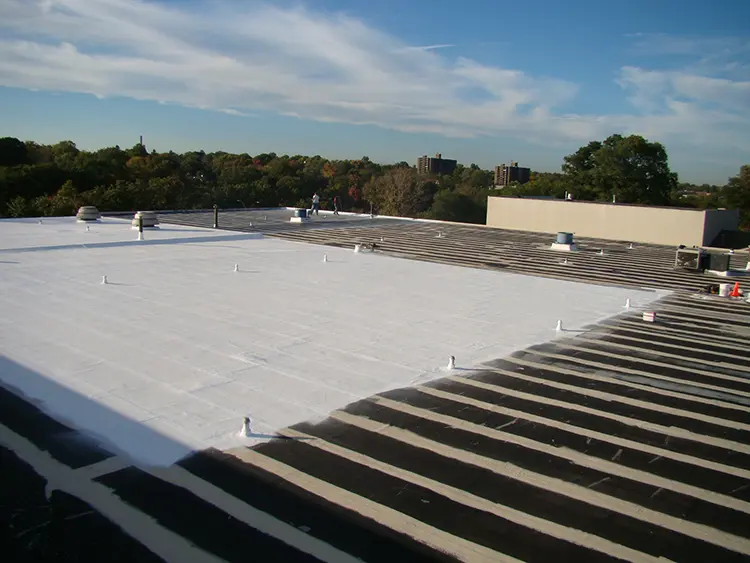
Restore a Suitable Roof Before Replacing It
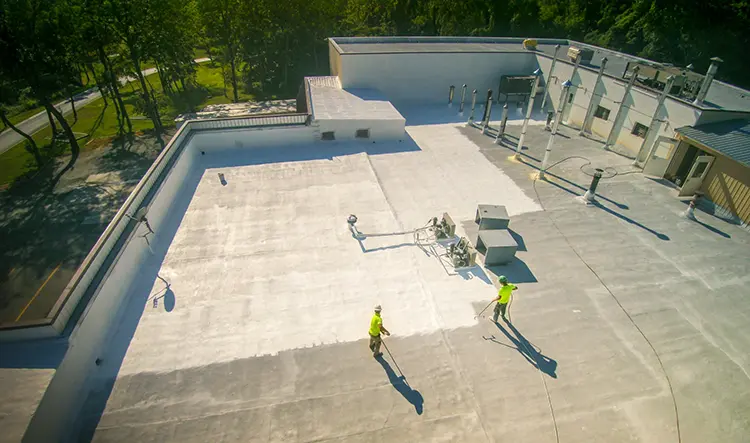
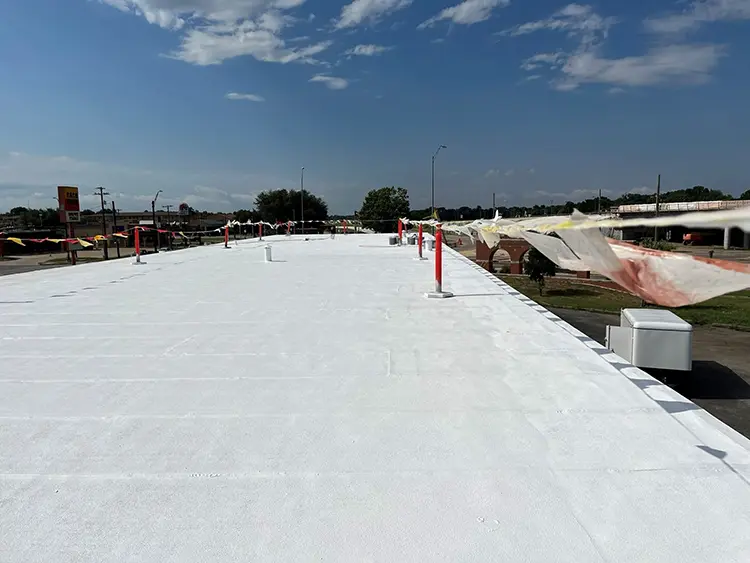
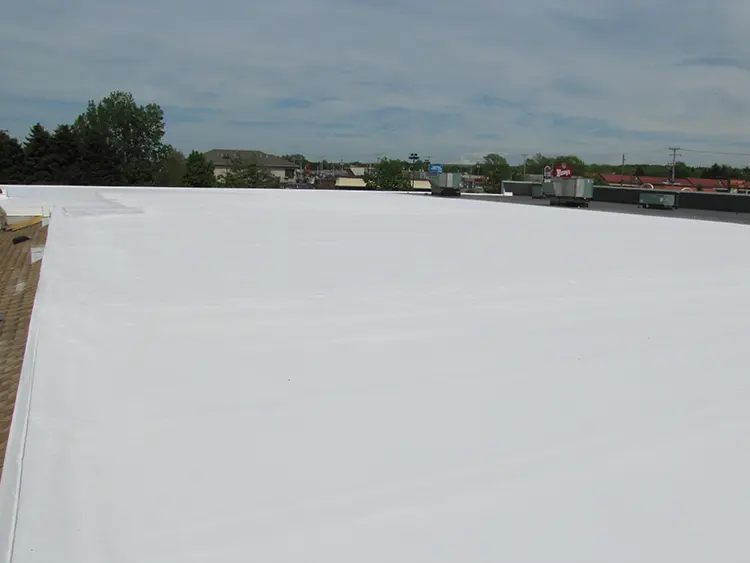
Commercial roof coatings create a new protective surface over compatible roofing systems after necessary repairs, cleaning, and preparation.
But coatings are not suitable for every roof. Moisture, structural issues, severe deterioration, incompatible materials, or drainage problems may require another solution.
Inspect
Evaluate the roof, moisture conditions, drainage, seams, and penetrations.
Prepare
Complete necessary repairs and create a clean, compatible surface.
Coat
Apply the specified coating and reinforce critical details.
Acrylic or Silicone: Match the Coating to the Roof
Neither chemistry is automatically the better choice. Substrate compatibility, drainage, weather exposure, preparation requirements, and the long-term roofing plan all affect system selection.
Reflective protection for
suitable roof conditions
Acrylic coatings are water-based systems available in reflective finishes. On compatible roofs that are properly prepared, they can help protect against ultraviolet exposure and normal weathering. Because drainage and manufacturer requirements matter, roofs that hold water may need corrective work or a different coating system.
Moisture resistance for
demanding roof conditions
Silicone coatings are often considered for roofs where ponding water may occur. Qualifying products can resist standing water and prolonged ultraviolet exposure. Because product selection and manufacturer requirements matter, performance depends on substrate compatibility, proper preparation, application, and continued maintenance.
Value and Seamless Protection Beyond the Initial Installation
For a qualifying roof, restoration may preserve more of the existing assembly and create a practical bridge between ongoing repair and eventual replacement.
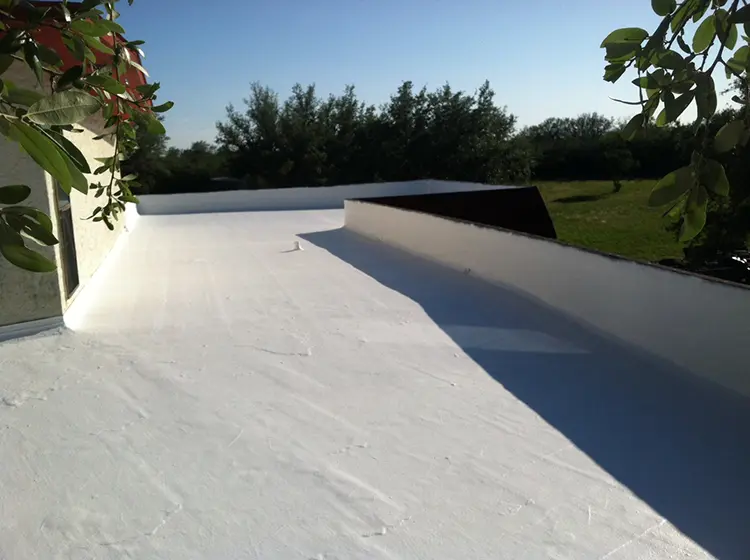
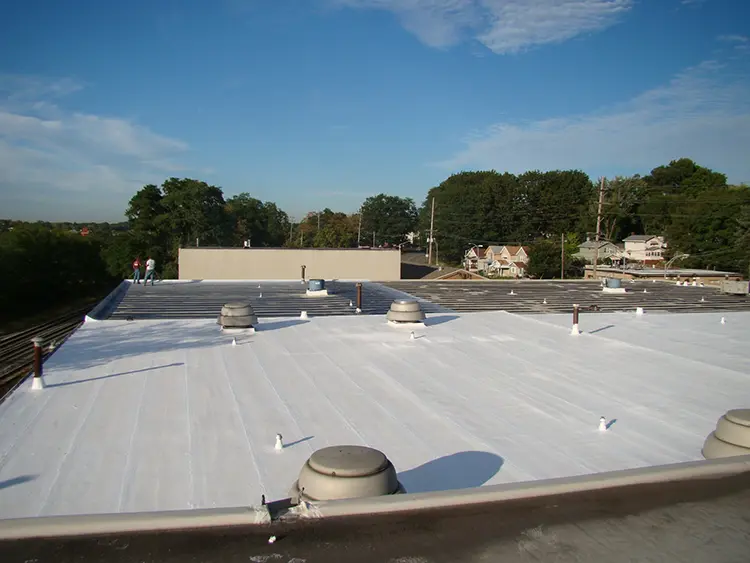
A properly installed coating forms a continuous membrane across the roof surface, covering many seams and joints where water infiltration can begin while remaining flexible as the building expands and contracts.
Less Tear-Off and Disruption
Keeping an eligible roof in place may reduce removal, material use, and disruption compared with a full replacement.
A Reflective Surface
Light-colored coatings can reduce solar heat absorption at the roof surface. Building-level energy effects vary with insulation, equipment, and other conditions.
A Maintainable System
Some coating systems can be inspected, maintained, and recoated when roof condition and manufacturer requirements allow.
See Whether Your Roof Is a Candidate
Start with an evaluation of the existing roof, drainage, details, and current condition.
Selecting the Right Coating System
A sound recommendation begins with the building and roof that are already there.
Existing Roof Condition
Confirm whether the assembly is dry, structurally sound, repairable, and suitable for restoration.
Current Roof Material
Identify the substrate and the cleaning, primer, adhesion testing, and preparation it may require.
Drainage and Ponding
Review how water moves across the roof and address conditions that can affect the specified system.
Climate and Exposure
Consider sunlight, precipitation, temperature changes, rooftop traffic, and surrounding conditions.
Seams and Penetrations
Plan the treatment of transitions, curbs, drains, flashings, fasteners, and other vulnerable details.
Long-Term Roofing Plan
Compare restoration, maintenance, and replacement timing against the property’s operating priorities.
Commercial roofing experience
Commercial Roofing Planned Around the Building
Roof condition, drainage, rooftop details, maintenance goals, and day-to-day operations all matter. Troyer considers the complete building before recommending restoration, repair, or replacement.
Serving Since 2012
Established roofing and construction experience.
Building Assessment
The existing assembly and operating needs guide the recommendation.
Clear Communication
Conditions, options, and next steps are explained practically.
Respect for Operations
Project planning considers access, occupants, and disruption.
FAQs About Roof Coatings
Can every commercial roof be coated?
No. The existing roof should be evaluated for moisture, structural condition, substrate compatibility, drainage, and repair needs. Some roofs are good restoration candidates, while others need repair or replacement work that a coating alone cannot solve.
What is the difference between acrylic and silicone coatings?
Acrylic systems are water-based and commonly selected for reflective protection on suitable roofs. Qualifying silicone products are commonly considered where ponding-water resistance is an important requirement. The right choice depends on the roof, product specifications, and project conditions.
Will a coating fix every roof leak?
No. A coating is part of a specified roof-restoration assembly, not a substitute for correcting wet insulation, structural problems, open details, failed flashings, or other conditions found during evaluation.
How long does a commercial roof coating last?
There is no responsible universal lifespan. Product, substrate, preparation, application thickness, exposure, drainage, maintenance, and any manufacturer or contractor program all influence expected service.
Talk With Us About Your Commercial Roof
Tell us what is happening with the roof and what you would like to accomplish. Troyer Roofing and Construction can evaluate the existing system and discuss whether repair, coating, maintenance, inspection, or replacement fits the building’s needs.
- Building type and property address
- Known leaks, drainage concerns, or prior repairs
- Your maintenance goals and timing
Prefer to talk? Call (855) 552-2343