Commercial Roofing Systems
Single-Ply Roofing for Commercial Buildings
TPO, PVC, and EPDM membranes give commercial property owners several ways to create a durable, waterproof roof. Troyer Roofing & Construction evaluates the building, roof conditions, operating demands, and performance priorities before recommending a system.
System Overview
Understanding Single-Ply Roofing
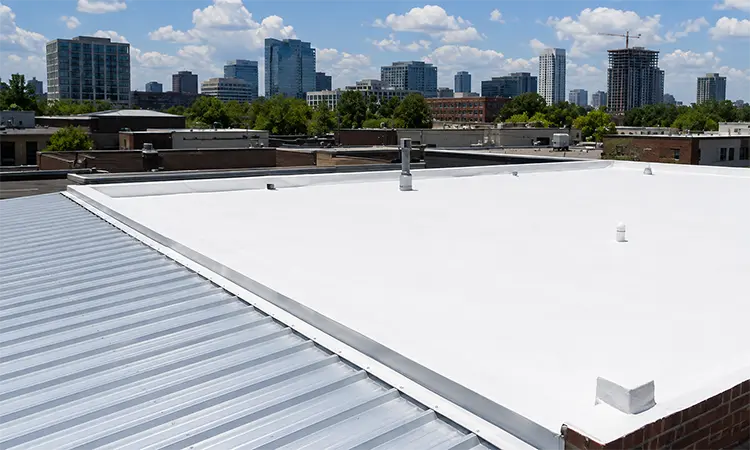
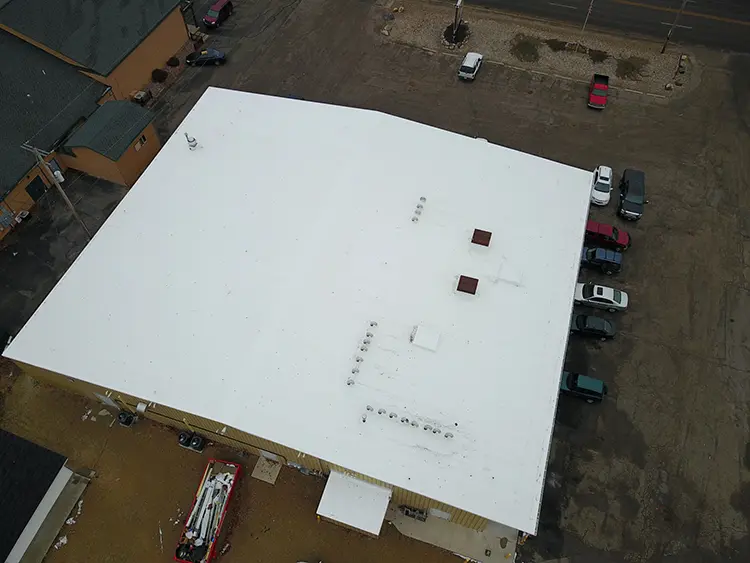
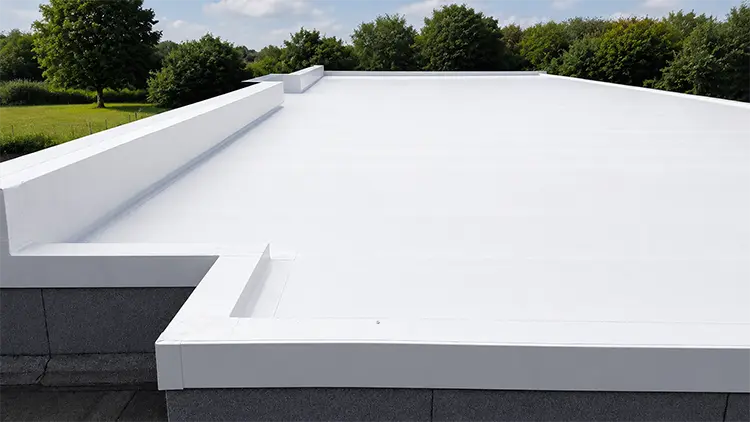
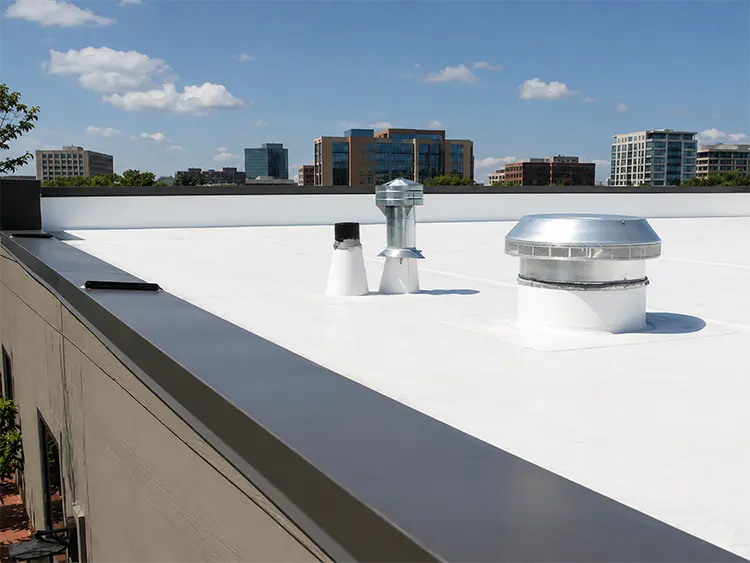
Single-ply roofing uses a flexible membrane to form a waterproof barrier over a commercial or industrial building. Compared with multi-layer roof assemblies, it relies on one primary membrane layer while still protecting the building from moisture, ultraviolet exposure, and changing temperatures.
The membrane must also accommodate normal building movement and seasonal expansion and contraction. Substrate preparation, attachment, seams, penetrations, flashing, drainage, and ongoing maintenance all influence long-term performance.
Material Options
Compare TPO, PVC, and EPDM
Each membrane offers a different balance of cost, reflectivity, chemical resistance, flexibility, and service history.
Reflective performance and balanced value
TPO is commonly considered for its combination of value, durability, and reflective options. Heat-welded seams create continuous connections across the roof surface.
Durability in demanding environments
PVC suits restaurants, manufacturing facilities, and other buildings where grease, chemicals, or contaminants can reach the roof. Its seams are heat welded, and the membrane remains flexible as the building moves.
Proven flexibility through changing weather
EPDM has a long history on commercial buildings and is valued for flexibility across wide temperature swings. Localized damage can often be repaired without replacing the full membrane.
Selection Factors
Choose the System Around the Building
The lowest installation price does not always represent the lowest long-term cost. A useful comparison considers the property use, rooftop exposure, drainage, service traffic, maintenance needs, energy priorities, and budget together.
Building Use
Restaurants, manufacturing, retail, offices, and industrial facilities can place different demands on the roof.
Energy Priorities
Reflective membrane options matter when reducing rooftop heat absorption is a priority.
Exposure and Traffic
Weather, rooftop equipment, service traffic, grease, and chemicals can influence material selection.
Lifecycle Cost
Compare installation, maintenance, repairability, and operating conditions rather than initial price alone.
Installation Details
Installation Quality Shapes Roof Performance
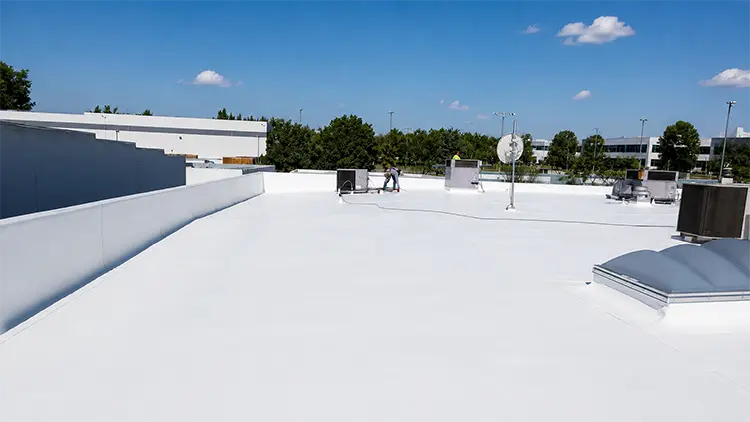
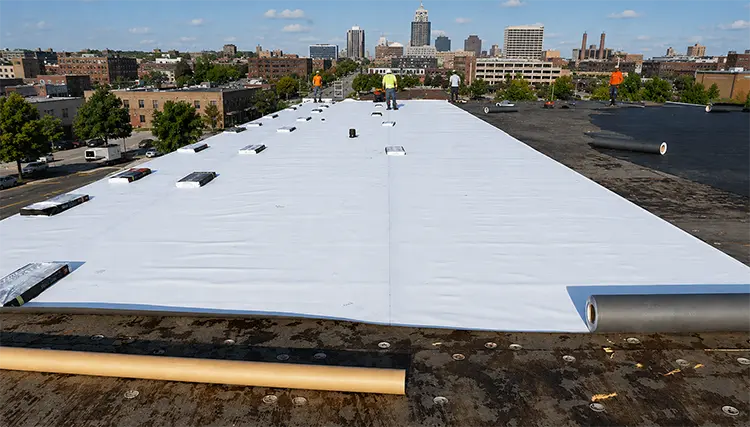
Even a high-quality membrane depends on correct installation. Proper substrate preparation, secure attachment, sealed or heat-welded seams, and careful flashing around edges, penetrations, and rooftop equipment help maintain a continuous waterproof barrier.
Routine inspections and timely maintenance can identify developing concerns before they become more costly. System selection, installation, and upkeep work together over the life of the roof.
Commercial roofing experience
Commercial Roofing Planned Around the Building
Roof condition, drainage, rooftop details, maintenance goals, and day-to-day operations all matter. Troyer considers the complete building before recommending a membrane system or another roofing approach.
Established
Experience
We have provided roofing and construction services since 2012.
Building-Specific
Evaluation
We assess the existing assembly and the building’s operating needs.
Clear
Communication
We explain the current condition and next steps in practical terms.
Operational
Planning
We plan around access, occupants, schedules, and potential disruption.
Single-Ply Roofing FAQ
How do TPO, PVC, and EPDM differ?
TPO is often considered for balanced value and reflective options. PVC is frequently evaluated where grease, chemicals, or contaminants are a concern. EPDM is known for flexibility and a long commercial roofing history.
Which single-ply membrane is right for my building?
The answer depends on the building use, existing roof, exposure, drainage, maintenance expectations, energy priorities, and budget. A roof evaluation helps narrow the options.
Why are seams and flashing details important?
Seams, penetrations, edges, and transitions are critical waterproofing areas. Correct welding or sealing and careful flashing help keep the membrane continuous.
Can preventive maintenance help a single-ply roof last longer?
Routine inspections and timely repairs can address small concerns before they spread, supporting the roof’s condition and useful service life.
Start a Conversation
Talk With Us About Your Commercial Roof
Tell us what is happening with the roof, what type of property you manage, and the service you are considering. That information helps begin a practical conversation about the next step.
- Building type and property address
- Known roof system, leaks, or prior repairs
- Your maintenance goals and timing
Prefer to talk? Call (855) 552-2343