
Commercial Roofing Systems
Spray Foam Roofing for Seamless Commercial Protection
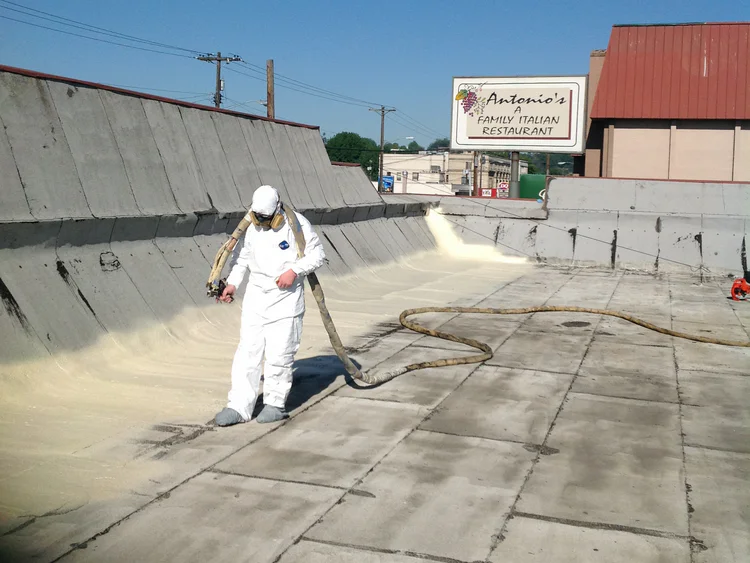
Spray polyurethane foam roofing combines insulation and waterproofing in one fully adhered system. Applied as a liquid and expanded in place, it creates a continuous layer that can follow roof transitions and reduce common paths for water intrusion.
How the System Works
A Seamless Roofing System That Insulates and Protects
Spray foam roofing begins with two liquid components that combine during application. The material expands to form rigid, closed-cell foam that bonds to a properly prepared roof surface.
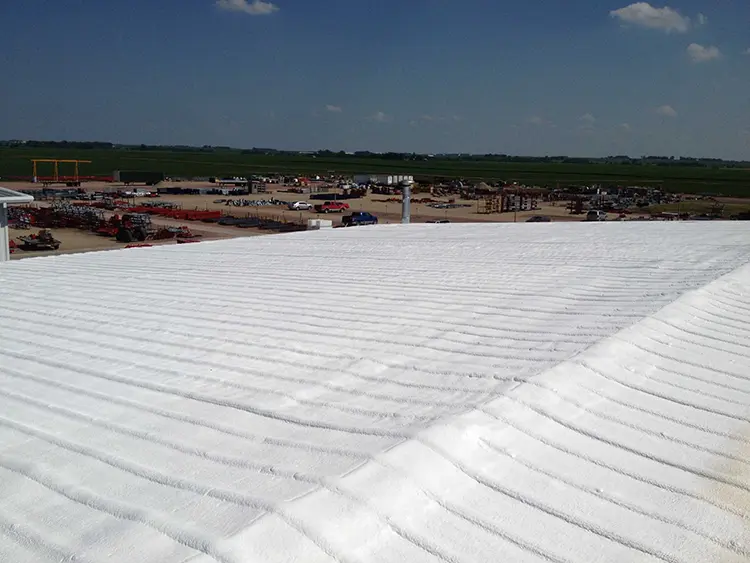
A protective coating is then applied over the foam to shield it from ultraviolet exposure and weathering. Together, the foam and coating create a continuous assembly that helps manage moisture and heat transfer at the roof.
Continuous Application
The foam follows transitions and rooftop details, creating a surface with few seams.
Closed-Cell Insulation
The foam adds insulation at roof level and can help reduce heat transfer through the assembly.
Protective Top Coating
An acrylic or silicone coating protects the foam from sunlight, weather, and surface wear.
Practical Advantages
Why Property Owners Consider Spray Foam
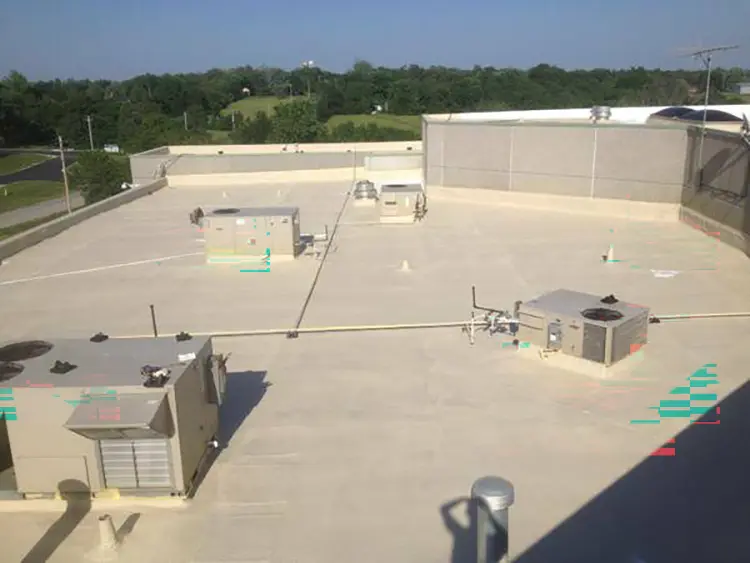
When the existing roof is suitable, spray foam can combine several useful functions in one restoration system.
Added
Insulation
Closed-cell foam adds thermal resistance at the roof, helping support more stable indoor temperatures.
Continuous
Waterproofing
The sprayed application reduces seams and conforms around irregular roof details.
Localized
Repairs
When the surrounding foam and coating remain sound, isolated damage can often be repaired locally.
Restoration
Potential
After evaluation, eligible existing roofs may be restored without requiring a complete tear-off.
Ongoing Care
Maintenance and Coating Renewal Protect the System
Like every commercial roof, spray foam performs best with routine inspection and timely maintenance. Early attention to small concerns can help protect the foam and coating from more extensive damage.
Inspect Regularly
Review drainage areas, flashings, penetrations, the roof surface, and the condition of the coating.
Repair Isolated Damage
Address punctures or localized concerns promptly to protect the surrounding roof assembly.
Renew the Protective Coating
When the coating has worn, recoating can restore ultraviolet and weather protection over sound foam.
Lifecycle Planning
Long-Term Value Depends on the Entire System
The foam, protective coating, flashings, drainage details, and maintenance plan all contribute to roof performance. The continuous foam layer can help control heat transfer and reduce common leak paths, while the coating protects that layer from sunlight and weather exposure.
When the foam remains sound, renewing the protective coating may extend the useful service of the assembly without replacing the foam below it. The timing depends on roof condition and should be based on inspection rather than a universal schedule.
Commercial roofing experience
Commercial Roofing Planned Around the Building
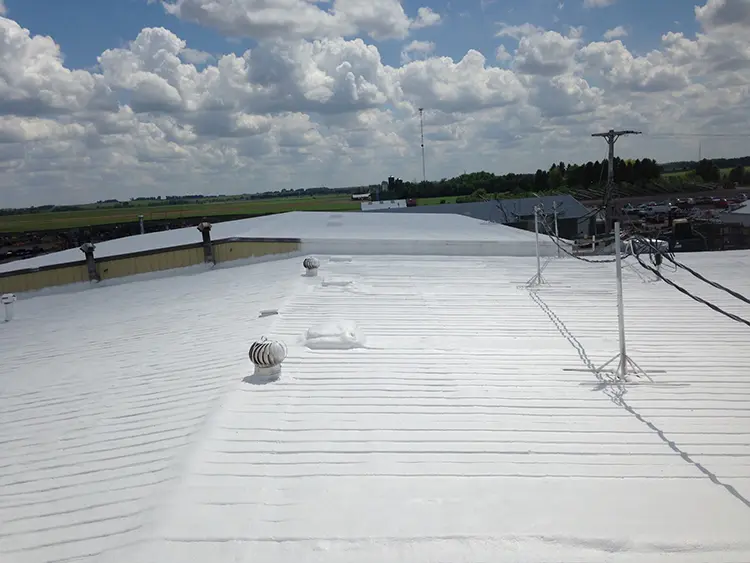
Roof condition, drainage, rooftop details, insulation goals, maintenance, and day-to-day operations all matter. Troyer considers the complete building before recommending spray foam or another roofing approach.
Serving Since 2012
Established roofing and construction experience.
Building Assessment
The existing assembly and operating needs guide the recommendation.
Clear Communication
Conditions, options, and next steps are explained practically.
Respect for Operations
Project planning considers access, occupants, and disruption.
Helpful Questions
Spray Foam Roofing FAQ
Can spray foam be installed over an existing commercial roof?
It may be possible when the existing roof and substrate are suitable. The roof should be inspected first to determine whether restoration is appropriate and what preparation is required.
Why does spray foam need a protective coating?
The coating shields the foam from ultraviolet exposure and weathering while helping maintain the roof’s protective surface. The coating can be renewed as conditions require.
How can spray foam support energy performance?
Closed-cell foam adds insulation at roof level and can reduce heat transfer through the roof assembly. Actual building performance depends on the complete envelope, climate, system design, and installation.
What maintenance does a spray foam roof need?
Routine inspections should include drainage areas, flashings, penetrations, the foam surface, and the protective coating. Damage should be repaired promptly, and recoating should be based on the coating’s condition.
Start a Conversation
Talk With Us About Your Commercial Roof
Tell us what is happening with the roof, where the property is located, and what you are trying to accomplish. Troyer can use those details to begin evaluating whether spray foam, coating renewal, repair, maintenance, or another option should be considered.
- Building type and property address
- Known leaks, drainage concerns, or prior coating work
- Your insulation, maintenance, and timing goals
Prefer to talk? Call (855) 552-2343